
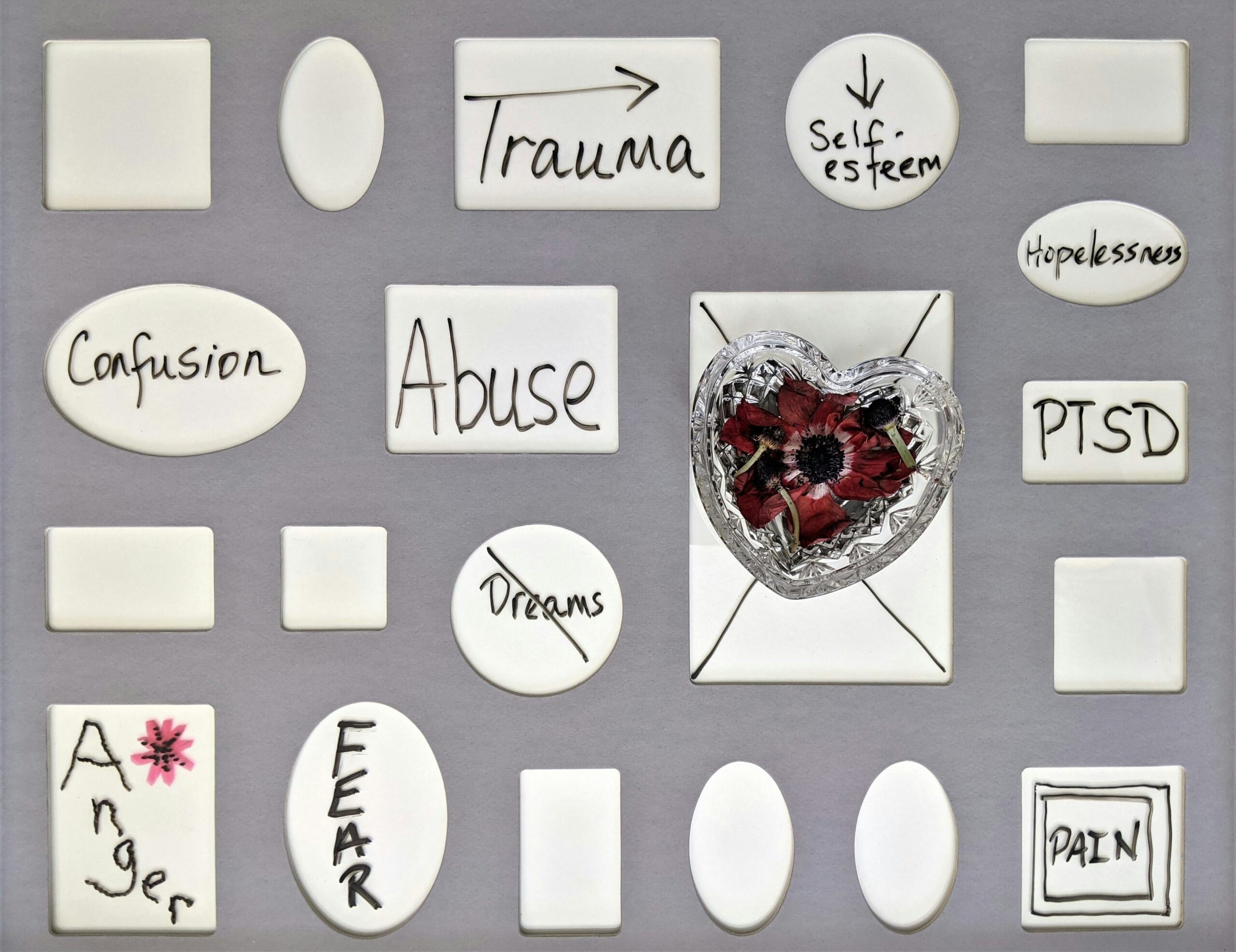
If you’re here reading this blog, let me first just say thank you. Thank you for taking the time to research this and I hope I can help you find some understanding, support, and resources. This can be such a big and scary topic and it makes sense that you might not know what to do or where to turn. I’m hoping this post can provide you with at least a little bit of what you’re looking for. We have tons of other resources on our site, so please feel free to look those over for even more information.
Before we get started, I’m going to encourage you to take some deep breaths as you continue on reading this post, and as you do your research because these topics can be really hard to read about. Please take breaks and take care of yourself however you need to.
Why is my daughter cutting herself?
Let me start with this conversation with unhelpful, judgmental reasons you might have heard or that you might even have thought, just so we’re on the same page here. Your daughter is NOT cutting herself because she’s:
- A bad kid
- Just seeking attention
- Trying to manipulate you or others
It’s unfortunate that there’s so much judgment out there regarding NSSI (non-suicidal self-injury) in the media and even by mental health professionals! This judgment ultimately leads to increased feelings of shame for those engaging in NSSI acts and confusion, frustration, etc. for their loved ones. All this just muddies the waters and makes it harder for people to ask for help, receive support, and solve the problem.
In Dialectical Behavior Therapy (DBT) we take a very dialectical (if you can imagine that!) and nonjudgmental stance when we examine ‘problem behaviors’ such as non-suicidal self-injury (NSSI) or self-harm. We view these behaviors as attempts to solve a problem. While I can’t speak to the specific reason why your daughter might be engaging in NSSI, this article will explore some common things I’ve heard. Please note that these may not be the reasons your daughter is self-harming, there could be plenty of other reasons not covered here.
Relief from emotional pain
This might seem counterintuitive, I mean, if you’re already in pain, even emotionally, why would someone want to cause themselves even more pain? Well, there’s a very real biological reason for this. Our brain processes emotional pain and physical pain in the same way. When we experience physical pain, though, there’s a site in which our body can release endorphins to and ease some of the pain. For instance, let’s say you stub your toe. Your brain will release endorphins to your toe and that will ease your pain. For emotional pain, there’s no site to send endorphins, so there’s no natural relief from our body. That’s where the NSSI comes in. People will often times report feeling relief in the immediate aftermath of self-harming. That relief is very reinforcing, meaning that their brain is making the connection to self-harm and feeling better, leading to that person being more likely to self-harm in the future to feel that immediate sense of relief. Of course this creates a vicious cycle, because after that initial relief, self-harm can then lead to people feeling guilt, shame, etc. which may lead to more dysregulation and the need to find more relief through NSSI.
A cry for help
“A cry for help” may not be the best way to phrase this, there may be better words or phrases. Essentially, self-harm might be a way to communicate to people in their environment that they need help or that they want to elicit a certain reaction. I know I’ve been guilty of this myself- I have plenty of little nieces and nephews that I love and spend time with. It might be easy for me to brush off how upset they are over something until they start throwing a tantrum. Once that tantrum hits, I realize how upset they are, I get more elevated myself in response (because who likes tantrums?), and I’m more likely to respond to their emotional outburst. To correlate this to teens and self-harm, self-harm may be a teen’s attempt to show you how upset they are about something or how much they’re hurting. It may be a way to communicate their pain to you.
Punishment
Some people use self-harm and self-injury as a way to punish themselves for any wrongdoing or transgression, perceived or otherwise. For instance, if someone experiences a lot of shame regarding their body, they may use self-harm as a channel for that shame and as a way to punish themselves. Similarly, they may self-harm if they do poorly on a test or if they get into an argument with a friend. Essentially, your child might be using self-harm as a way to alleviate the guilt or shame they feel, regardless of whether that ‘transgression’ makes sense to you or not.
These are just some common reasons someone might self-harm. In DBT, whenever someone engages in a life-threatening behavior, such as self-harm, we like to do a behavioral chain analysis. Essentially, we break down the moment into minuscule details to figure out what prompted the situation and the vulnerability factors in place that might have made it more likely to result in self-harming (like being tired, forgetting to take meds, etc.). Then, we examine everything the person was thinking, everything the person was feeling both emotionally and physically, what the person was doing, and what was happening around them. We also examine what happened in the immediate aftermath and then the more long-term aftermath. The immediate aftermath tells us about potential reinforcers and gives us clues into what problem that person is trying to solve with self-harm. For instance, if they immediately felt relief after self-harming, we can probably say that they were, at least in part, using self-harm as a way to relieve pain. We then use a solution analysis to find various points in the chain where more effective and skillful behavior can be interjected so that different choices can be made in the future and so that person has other options to solve their problem.
What causes a child to hurt themselves?
I’m going to encourage us to answer this question from the lens of self-harm as a way to solve a problem. I’m not saying it’s an effective way to solve a problem, as self-harm of course leads to negative short- and long-term consequences. However, until someone knows better, they’re going to do what they know. So, here are some problems children might be trying to solve through self-harm:
- Heightened Emotion Dysregulation– as discussed in more detail above, self-harm can be used as a way for someone to express or release intense emotions. While self-harm is an ineffective strategy because of its long-term consequences, science has shown that what happens biologically when someone has an injury actually does lead to various endorphins being released, which will make someone feel better. Again, personally, self-harm is not my favorite option for someone to utilize in order to experience this relief, and if they don’t know better or more effective ways to do this, then they’ll rely on what they know. We’ll want to solve this problem by teaching that person more effective ways to regulate their emotions and find relief when distressed.
- Bullying and/or Not Fitting In– things such as bullying and peer pressure might lead someone to self-harm. Developmentally, teens are at a stage where they want to fit in so if they’re experiencing bullying it would be more dysregulating for them at this stage than for other people at other stages of life. This leads to the point right above this one, a child might use self-harm as a way to regulate the emotions they experience if they’re bullied. Also, self-harm is ‘contagious’ in the sense that if people are exposed to it through peers, media, etc., they’re more likely to engage in these acts as well. So, someone might engage in self-harm behaviors because their friends do it and it offers a sense of relief. In treatment, if this is the reason why someone is engaging in self-harm, we’ll want to help them manage their dysregulation, tolerate negative emotions, and help them find communities in which they feel accepted and have a sense of belonging.
- To Get a Need Met– self-harm might be a way for someone to get a need met. Let me give you an example, let’s say Susan, a 14-year-old girl, is feeling stressed and overwhelmed at school. Susan might tell her mom every day she doesn’t want to go to school. She might say she doesn’t like it, the other kids are mean, or that her stomach hurts. Mom is so busy with work and maintaining the household, plus she has heard all of this before and she knows Susan has to go to school anyway. So, every morning is a battle between Susan’s refusal to go to school and mom yelling, pushing, and screaming for her to go because mom can’t be late for work. Eventually, Susan self-harms. Mom sees the injuries and feels shocked, scared, and guilty. Mom now realizes just how much pain Susan is in. Because of mom’s dysregulation and not knowing what to do, mom tells Susan she can stay home from school today. Susan now has learned that when she tells mom she doesn’t want to go to school, mom doesn’t listen, even when Susan believes she was very clear about not wanting to go. Susan learns that, in order to be taken seriously, she has to do something drastic to get mom’s attention. This can reinforce self-harm behavior and make it more likely to occur in the future, especially if this is a repeated event.
- Wanting a Sense of Control– historically, kids do not get to make a lot of choices. They’re told where to go and what to do all day, every day. While teens might get some choices here and there, large parts of their lives are dictated by their parents, teachers, or other adults. While this isn’t an inherently bad thing, teens are at the age where they want to start making their own rules and doing their own thing, and often they can’t. Teens also don’t tend to have access to a lot of resources such as money, transportation, or other resources because of limitations due to age, money, etc. Because of this, they have to rely on others to do or get things for them. All of these factors, and more, can lead to feeling a lack of control. When this happens, people might look for what they do have control over, which tends to be their own bodies. When coupled with the factors listed above, self-harm can be a way to establish a sense of power or control. If this is the problem your teen is trying to solve, their clinician may help the teen find areas in their life they do have control over and may choose to incorporate their family unit into the discussion to troubleshoot this together.
To be clear, not everyone self-harms for this reason. This also tends to be the point that people refer to as “manipulative”. While I can understand why people may end up viewing this as “manipulative”, I’m going to ask you again to remain nonjudgmental here. In this example, Susan tried to communicate her pain to her mom. Susan is 14, and she may not have the communication skills needed to fully articulate her point to her mom, even if she believes she’s being super clear. We can’t really fault her for that, I don’t think I would’ve known exactly what to say or do if I was feeling that upset at that age. Then let’s look at mom’s perspective. We all know how busy life can get between work responsibilities, home life, taking care of yourself, your family, etc. If Susan said, “Mom I don’t want to go to school, I don’t like it. Kids are mean, I don’t like my teacher, and I don’t understand the work,” I would understand if mom’s thinking to herself something like, “Well, yeah. Of course, kids are mean, they’re always mean. Of course, you don’t like your teachers. Who does? And, maybe if you studied more instead of scrolling on your phone, you’d probably understand the material better.” While elements of this can be valid, if mom is thinking this, it may lead mom to not really take Susan’s concerns that seriously, especially if she’s busy. I wouldn’t blame or judge mom for that either, because it does make sense. Now, if mom actually says these things to Susan, Susan would likely feel incredibly invalidated, alone, and probably even shameful. These feelings, of course, if we’re connecting this to the above points, would lead Susan to self-harm, especially if she doesn’t have other coping skills. If, through assessment, we find that this is one of the factors contributing to self-harm, we’ll work with the teen to address any barriers in effectively communicating (if that’s what’s happening), help the teen find ways to manage the various problems in their school environment more effectively, tolerate negative emotions safely, and we’ll likely engage with the parents to help them find more effective ways to respond to self-harm acts as to not reinforce the behavior.
Self-harm is a way for people to solve some kind of problem. If we can nonjudgmentally listen to these individuals in our lives and assess for the variables in play, we can help identify what that problem is and find alternative ways to solve that problem. This usually requires the help of our environment, especially for teens, so prepare yourself for that! There’s a reason your child is self-harming. This isn’t to blame you or make you feel guilty or shameful as a parent, it’s more of a recognition that all of our emotions, thoughts, and behaviors are shaped and influenced by our environments. You’re influencing your teen and your teen is influencing you. Any number of factors are contributing to this behavior in your teen and it will likely require a change in certain behaviors on your end to do things differently to elicit a different response. So, prepare to work with your teen’s therapist and I always recommend the parents of a teen experiencing this degree of dysregulation receive counseling themselves. This stuff is so hard and it’s likely to cause big emotions in you, too. You deserve space, help, and support to figure out how to work through this, too.
What age is DBT appropriate for?
DBT can be adapted to work with any individual across their lifespan. There are adaptations of DBT for children, teens, and adults. At CCDBT, we have a teen program designed for ages 13-18. We also have an adult program for ages 18+. Both comprehensive DBT programs require participants to engage in a skills training group, individual therapy, have access to 24/7 phone coaching with their therapist, and all of the therapists attend and take part in a consultation team. The teen program’s group is a multi-family group, meaning the teen joins the group with an adult in their life, we typically recommend the parental figure the teen struggles with the most. The adult and the teen attend group together, both as equal participants in the group. This allows the teen and their adult to learn the skills side-by-side and both can develop better strategies for managing dysregulation and communicating more effectively with each other. Learn more about how DBT helps teens with depression in our comprehensive guide to DBT for adolescent depression

Is DBT scientifically proven?
Short answer, yes. DBT is one of the most rigorously studied and scientifically validated forms of psychotherapy and has had a number of studies completed over the years that have proven its effectiveness. DBT has been shown to be effective in treating a multitude of mental health diagnoses and problem behaviors. Studies have shown DBT to help:
- Reduce or eliminate self-harm and suicide ideation and behaviors
- Manage mental health disorders including anxiety, depression, PTSD, personality disorders, etc.
- Reduce substance use
- Reduce binge eating and purging behaviors
DBT is endorsed by various mental health professional organizations such as:
- World Health Organization (WHO)
- Substance Abuse and Mental Health Services Administration (SAMHSA)
- American Academy of Child and Adolescent Psychiatry (AACAP)
- And various organizations across the globe including:
- The American Psychological Association (APA)
- The National Institute for Health and Care Excellence (NICE) (UK)
- Canadian Network for Mood and Anxiety Treatments (CANMAT)
- Australian Psychological Society (APS)
This is not an all-inclusive list, and I hope it goes to show how DBT is endorsed across the globe as an effective, evidence-based form of therapy. These endorsements are grounded in decades worth of growing research showing DBT’s effectiveness in managing a wide range of mental health challenges.
In Summary
I hope I was able to reach my goal of providing information, support, and ideas for next steps. We offer different options for programs and types of therapy depending on the needs of you and your family. If you need help that we don’t provide, reach out to us anyway. We will do our best to get you connected to different resources that may better suit your needs. This can be such a scary and confusing time for you and your family. You don’t have to do this alone. There is help out there. Feel free to reach out to us so we can help you and your family get started on this journey together.