

Welcome! Are you on the hunt for more coping skills that will help lower your emotional dysregulation? Have you tried different grounding techniques and found them to be helpful, but maybe find that you need something more? Look no further than the EMDR & You series! In the article, I will briefly discuss what EMDR is and how you can use its skills to better regulate your emotions and find that inner balance.
EMDR (Eye Movement Desensitization and Reprocessing) is a type of psychotherapy designed to help people process and heal from traumatic experiences. Developed by psychologist Francine Shapiro in the late 1980s, EMDR uses guided eye movements (or other forms of bilateral stimulation) while you, as the client, recall distressing memories. This process is thought to help the brain reprocess those memories, reducing their emotional intensity and helping you gain a new perspective. EMDR is commonly used to treat PTSD, anxiety, depression, and other trauma-related conditions.
If interested, check out the blog post What is EMDR? for a more comprehensive explanation.
One of EMDR’s grounding techniques (by grounding technique, I mean a skill that decreases tension and increases awareness of yourself, your surroundings, or the present moment) is the Container Method. This technique works to create distance from whatever negative emotion or thought you’re experiencing and compartmentalize it. Below are step-by-step instructions to help you practice this skill; however, be aware that it can be helpful to listen to someone read it out loud as you go (e.g., a therapist, friend, or partner).
The Container Method

- Begin by assuming a mindful position
- Feet planted firmly on the ground or rooting your seat bones as you sit, spine straight.
- Close your eyes and pay attention to your breath. Noticing the natural in and out of breathing.
- If breathing techniques aren’t your thing, try pressing your hands together or on your legs, noticing the sensation of pressure/touch.
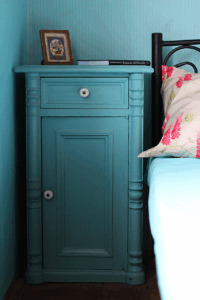
- Begin to imagine a container (of any kind) in front of you.
- Allow yourself to just choose. Don’t think too hard about what it should be. Just allow what comes up to come up.
-
- Consider:
-
-
-
- The color/material
- The size and shape
-
-
-
- Does it lock? How does it close and open? This container can look however you want; the only rule is that it has to be able to open and close.
- Consider:
- Allow yourself to just choose. Don’t think too hard about what it should be. Just allow what comes up to come up.
- Imagine you are pulling any thoughts, emotions, or body sensations you no longer want to carry out of yourself and placing them (however you wish) into the container.
- Example:
- Imagine your emotions are colors or textures.
- Imagine your thoughts are like streams of words or files to tuck away.
- Example:
- Acknowledge that you are placing these emotions/thoughts/feelings away for safekeeping, not something to discard or throw away.
- This can be challenging. Give yourself time for repetition.
- When ready, imagine you’re shutting your container and tucking it away somewhere safe.
- Consider the sound your container makes when you close it.
- Come back to noticing your breath again. Notice any changes to how you feel emotionally and physically.
- Slowly open your eyes and return to your present moment.